

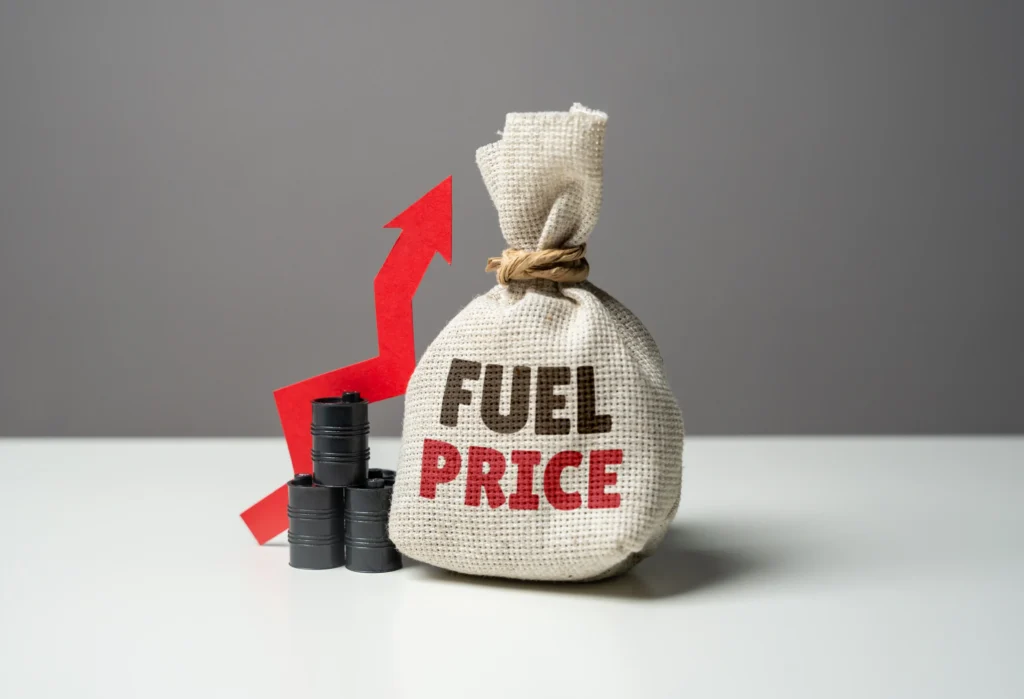
Rising fuel prices can throw your shipping budget off track without warning. One week your freight rates look okay. Next, you are paying more with little explanation. That jump often comes down to a fuel surcharge.
Fuel surcharges are additional fees that carriers add to base freight rates to cover the ongoing volatility of fuel costs. Since diesel prices can swing from week to week depending on global markets, carriers can’t simply absorb those fluctuations into a fixed rate.
Instead, the fuel surcharge acts as a floating adjustment. If you move goods often, even small changes can compound quickly.
This detailed guide covers what a fuel surcharge is and how it works. You will also see how it affects your total freight spending and what you can do about it.
What Is a Fuel Surcharge?
A fuel surcharge is an extra fee added to freight charges. It covers changes in fuel costs, mainly diesel. Carriers add this charge to protect themselves when fuel prices rise.
Think of it as a pricing adjustment built into freight contracts. The base rate covers the freight service and the fuel surcharge adjusts that rate when fuel prices shift.
Without a transportation fuel surcharge, carriers would need to raise base rates every time fuel prices go up. That would create constant contract changes. Instead, the surcharge creates flexibility as it moves with the market.
Take the example of a trucking company that quotes a base rate of $1,500 for a shipment. If fuel prices rise, they add a surcharge on top of that amount. When prices fall, the surcharge may drop as well.
Fuel surcharges help carriers stay in business during diesel price spikes. It also helps shippers track fuel-related costs more effectively instead of guessing how much is included in a flat rate.
How Fuel Surcharges Are Calculated
There’s no single universal formula for calculating fuel surcharges. However, the most common method ties the surcharge directly to the national average diesel price, which the U.S. Energy Information Administration (EIA) updates weekly. Here’s what you need to know:
- The carrier sets a baseline fuel price, though this varies by contract and carrier.
- When the weekly EIA national average diesel price rises above that baseline, a surcharge kicks in.
- Carriers typically calculate the surcharge amount per mile, using the truck’s average fuel efficiency (MPG) as a factor.
Here’s a simplified example using a common formula. Say diesel is at $4.00/gallon, the baseline is $1.25, the truck averages 6 MPG, and the shipment is 1,200 miles. The surcharge will be:
- ($4.00 – $1.25) ÷ 6 = $0.458 per mile
- $0.458 × 1,200 miles = $549.60 total fuel surcharge
Some carriers use percentage-based surcharges instead. In this case, the transportation fuel surcharge might be 10% or 20% of the base freight rate, depending on the fuel price range.
Carriers typically publish fuel surcharge tables. Shippers, then, use these tables as fuel surcharge calculators to estimate costs before booking freight.
Surcharge formulas also vary by freight type. Some carriers may apply a percentage-based model, while other carriers may use a per-mile approach.
Why Fuel Surcharges Fluctuate
The main reason why surcharges fluctuate is simple: the price of diesel. And diesel doesn’t move in a straight line. Several forces push it up and down throughout the year, including:
Global Oil Prices
Diesel is a petroleum product, so its price is tied directly to crude oil markets. When the Organization of the Petroleum Exporting Countries (OPEC+) cuts production, or when the U.S. dollar weakens against other currencies, crude prices rise. Diesel prices follow shortly after.
The same also happens when geopolitical tensions threaten supply routes.
Seasonal Demand
Diesel demand typically increases in winter months. It also rises during agricultural seasons when equipment runs heavily. Such seasonal patterns create predictable pressure on diesel prices each year.
Regulatory Factors
Environmental regulations and fuel quality standards affect supply and cost. When refineries go offline for maintenance or extreme weather disrupts operations, regional diesel prices can rise sharply. This can happen even when crude markets are stable.
Most carriers update their transportation fuel surcharges weekly. They base their adjustments to the EIA’s Monday publication of the previous week’s average diesel prices. This means a shipper’s freight cost can technically change from one week to the next. However, it’s worth noting that some carriers may use bi-weekly or monthly updates.
How Fuel Surcharges Affect Freight Rates

Fuel surcharges directly influence the total cost of shipping. Here’s how:
- Direct cost impact: On a week when diesel prices are high, fuel surcharges increase the total freight bill. This, ultimately, changes the math on whether a particular lane or shipment is profitable.
- Contract negotiations: In contract shipping, the base rate and the fuel surcharge formula are negotiable. Some shippers focus on getting a low base rate but pay less attention to the surcharge formula. This, in turn, leads to more costs than expected when diesel prices rise.
- Mode differences: Truckload (TL) shipments feel fuel surcharge pressure heavily because the entire truck capacity is dedicated to one shipment. Less-than-truckload (LTL) shipments spread fuel costs across multiple shippers. Intermodal typically comes with lower fuel surcharges because rail is more fuel-efficient than truck for long hauls. This is why shippers sometimes shift volume to intermodal when diesel prices spike.
- Carrier selection: When fuel costs are high, shippers sometimes opt for carriers with more transparent surcharge structures. A carrier with a lower base rate but a more aggressive surcharge table may ultimately cost more than one with a slightly higher base rate and a capped surcharge.
These factors prove that transportation fuel surcharges affect the economics of every shipment. Whether it’s a direct hit to margins or the choice of mode and carrier, they affect how entities make business decisions.
Managing Fuel Surcharges as a Shipper
You cannot control fuel prices, but you can control how you plan for them. Here are some practical strategies:
- Track diesel prices regularly. The EIA publishes national and regional diesel averages every Monday. Watching this number weekly helps you anticipate surcharge changes before invoices arrive.
- Negotiate the baseline. Many shippers don’t realize that the baseline fuel price in their contract is negotiable. A higher baseline means a higher diesel price is needed before the surcharge kicks in.
- Request surcharge caps. Some carriers will agree to a maximum surcharge percentage in a contract. This helps shippers know what to expect during price spikes.
- Consolidate shipments. Fewer, fuller loads mean fewer surcharge calculations. Consolidation can reduce your freight rates and total fuel surcharges.
- Consider route efficiency. Shorter routes mean smaller surcharges. Working with carriers who use optimal routes can reduce unnecessary miles.
- Choose carriers with transparent surcharge policies. Carriers who publish their surcharge tables openly are easier to budget around.
When you work with a fuel partner like Go Fuel Monkey, you get clarity on fuel pricing and services addressing the needs of shippers and carriers.
Key Takeaways
- Fuel surcharges compensate carriers for fluctuating fuel prices.
- They are calculated using fuel price indexes or formulas.
- Surcharges can significantly impact total freight costs.
- Understanding surcharge structures helps shippers budget and negotiate better.
FAQs
What is the average fuel surcharge percentage?
Fuel surcharge percentages vary widely. They can range from 5% to over 30% of the base rate, depending on diesel price levels and the carrier’s formula. There is no fixed average across the industry.
How often do fuel surcharges change?
Most carriers update their fuel surcharges weekly, while others update bi-weekly or monthly. Always make sure the specific update schedule is in your freight contract.
Can fuel surcharges be waived or negotiated?
In some cases, yes. You may negotiate the baseline fuel price or the rate increments. Full waivers are rare, but contract terms may be adjustable.
Are fuel surcharges included in all freight rates?
Not always. Some quotes show a combined rate, while others list the surcharge separately. It is important to confirm how your shipper structures their rate before booking.
How can I monitor fuel price trends?
The best free resource is the U.S. Energy Information Administration (EIA), which publishes weekly national and regional diesel prices.
Talk To Us About Fuel Surcharges Today

Fuel surcharges are part of modern freight pricing. They are not a temporary add-on or a carrier quirk. These charges exist because diesel prices are unpredictable. Without them, carriers wouldn’t hold rates stable on shipping lanes. For shippers, that means fuel surcharges aren’t going away.
When you understand how a fuel surcharge works, you can plan your budget with fewer surprises. You can read quotes more clearly and have better conversations with carriers.
If you want a better understanding of your fuel and freight costs, it helps to work with a partner who understands fuel surcharges. At Go Fuel Monkey, we work with shippers and carriers who want answers about fuel and freight costs. Whether you need help to understand how surcharges affect your specific freight lanes or you’re looking for a more transparent fuel partner, we’re here to help.
Contact us today and let’s talk through what makes sense for your operation. We are here to help you manage your freight costs.